
Description
#AI Workstation #Open Source #Self-hosted #AGPL-3.0 #Docker #Windows #macOS #Linux
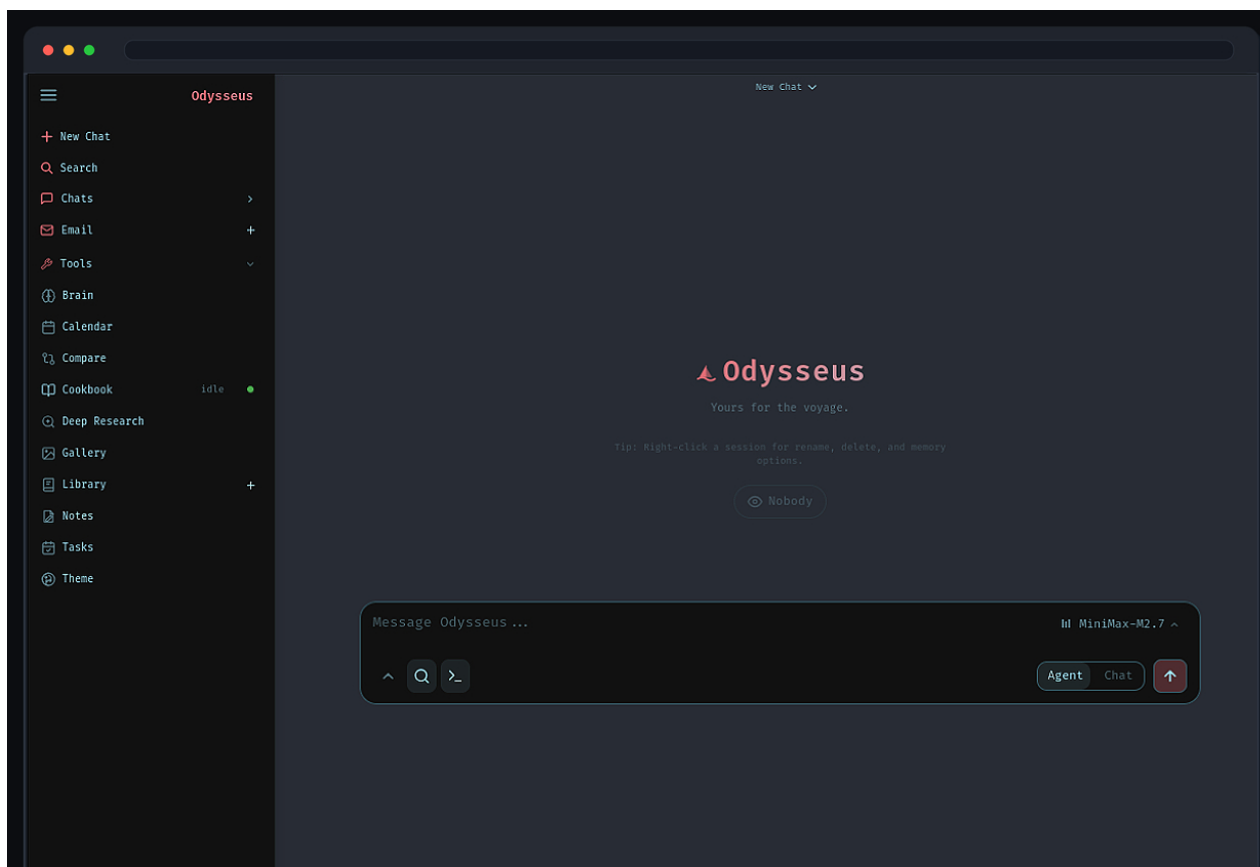
Odysseus is an open source self-hosted AI workstation licensed under the AGPL-3.0 open source agreement, supporting quick deployment via Docker. It helps users build an intelligent work platform locally that integrates AI dialogue, Agents, document processing, email management, knowledge management, and task collaboration. The software supports local large language models and cloud API models, with data stored locally by default, making it suitable for developers and individual users who prioritize privacy, security, and offline usage experience.
AI Chat and Agent: Supports local models and API models for intelligent dialogue, and includes capabilities for tool invocation, MCP, file operations, Shell execution, skill expansion, and long-term memory.
In-depth Research: Supports multi-step web research, automatically collecting reference materials, analyzing sources, and generating structured research reports.
AI Document Editing: Built-in writing editor that supports AI rewriting, polishing, content suggestions, and text creation.
Multi-format Document Support: Compatible with Markdown, HTML, CSV, etc., and provides syntax highlighting.
Email Management: Supports IMAP/SMTP email, allowing for email sending and receiving, summary generation, label management, reminders, and AI reply draft generation.
Notes and Task Management: Integrates notes, to-do lists, reminder functions, and supports scheduled Agent task execution.
Calendar Synchronization: Supports CalDAV calendar synchronization for unified schedule management.
Rich Extension Capabilities: Provides features such as image gallery, image editor, theme switching, file uploads, web search, preset templates, session management, and two-factor authentication (2FA).
Docker Deployment: Supports one-click deployment with Docker Compose, simple installation process, suitable for running in local server or NAS environments.
Self-hosted Architecture: Users manage their own data, with the option for offline use based on configuration (except for features that rely on online models or services).
Odysseus is an open source self-hosted AI workstation licensed under the AGPL-3.0 open source agreement, supporting quick deployment via Docker. It helps users build an intelligent work platform locally that integrates AI dialogue, Agents, document processing, email management, knowledge management, and task collaboration. The software supports local large language models and cloud API models, with data stored locally by default, making it suitable for developers and individual users who prioritize privacy, security, and offline usage experience.
Software Features
AI Chat and Agent: Supports local models and API models for intelligent dialogue, and includes capabilities for tool invocation, MCP, file operations, Shell execution, skill expansion, and long-term memory.
In-depth Research: Supports multi-step web research, automatically collecting reference materials, analyzing sources, and generating structured research reports.
AI Document Editing: Built-in writing editor that supports AI rewriting, polishing, content suggestions, and text creation.
Multi-format Document Support: Compatible with Markdown, HTML, CSV, etc., and provides syntax highlighting.
Email Management: Supports IMAP/SMTP email, allowing for email sending and receiving, summary generation, label management, reminders, and AI reply draft generation.
Notes and Task Management: Integrates notes, to-do lists, reminder functions, and supports scheduled Agent task execution.
Calendar Synchronization: Supports CalDAV calendar synchronization for unified schedule management.
Rich Extension Capabilities: Provides features such as image gallery, image editor, theme switching, file uploads, web search, preset templates, session management, and two-factor authentication (2FA).
Docker Deployment: Supports one-click deployment with Docker Compose, simple installation process, suitable for running in local server or NAS environments.
Self-hosted Architecture: Users manage their own data, with the option for offline use based on configuration (except for features that rely on online models or services).
Screenshots
Tags:agent