Description
< #UI Design #Prototyping #Design Collaboration #Figma Alternative #Self-hosted #Open Source
Penpot is an open-source design and prototyping platform for product teams, and it is commonly reached for as the open-source alternative to Figma. Figma charges per editor every month, while Penpot can be used on its hosted service or deployed on your own servers, where self-hosting costs nothing.
What sets it apart is that designs are expressed as code: files are built on open standards — SVG, CSS, HTML and JSON — so developers receive structure they can read rather than a picture to reproduce. It fits teams that need real design collaboration while keeping ownership of their data and meeting compliance requirements, since the design assets stay on their own infrastructure with no vendor lock-in.
Real-time collaboration: several people work in the same file at once, with designs, comments and changes syncing instantly so a growing team keeps one rhythm.
Built on open standards: files rest on SVG, CSS, HTML and JSON, so exporting and further processing never depend on a proprietary format and design assets stay portable.
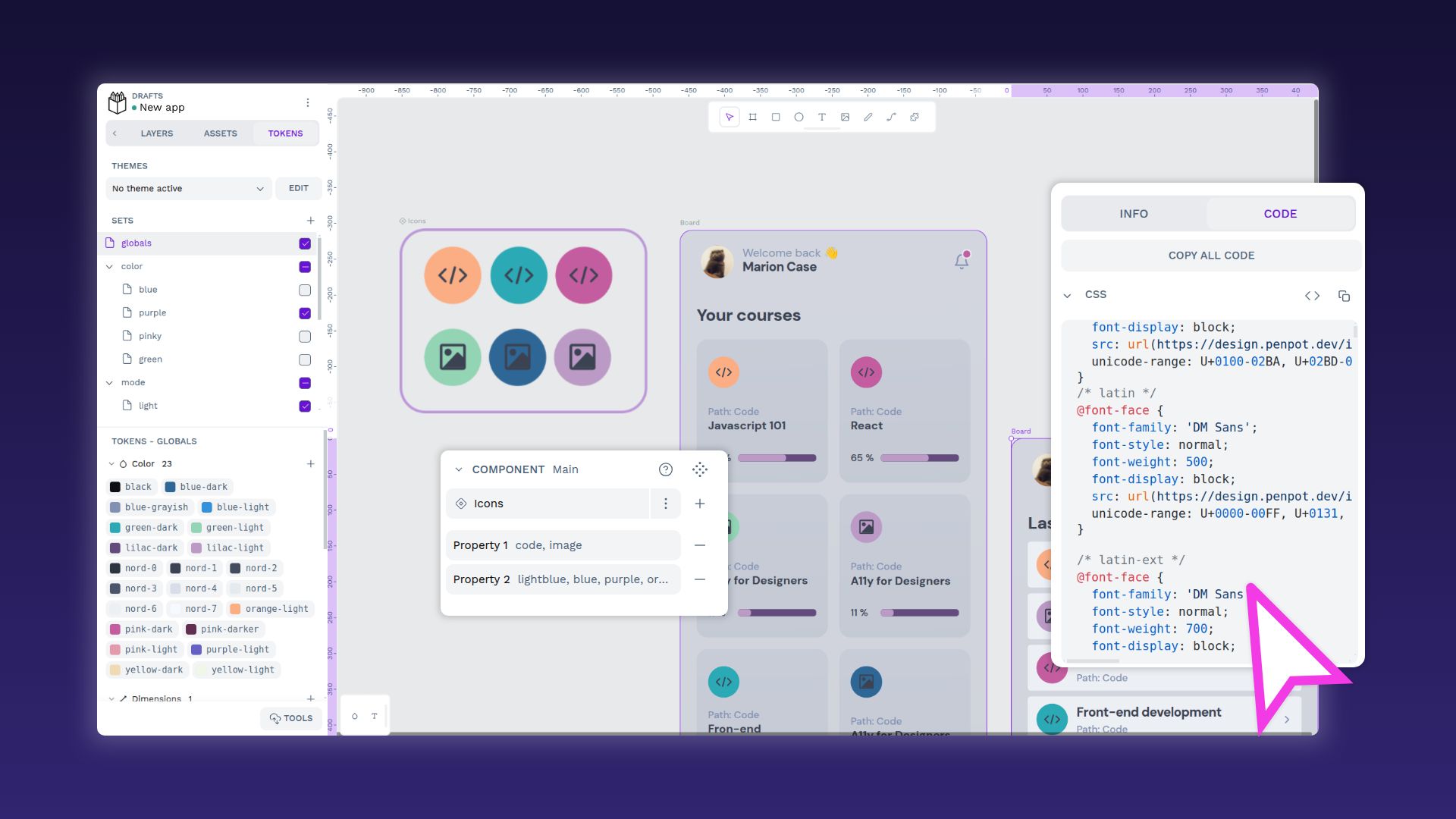
Inspect mode with real code: the inspect tab produces SVG, CSS and HTML directly, so developers stop measuring from annotations and implement much faster.
Design systems and tokens: native design tokens, components and variants give design and development one source of truth, keeping interfaces consistent across projects and platforms.
CSS Grid and Flex layout: responsive interfaces are built on the real layout model of the web, so a design behaves from the start the way the shipped code will.
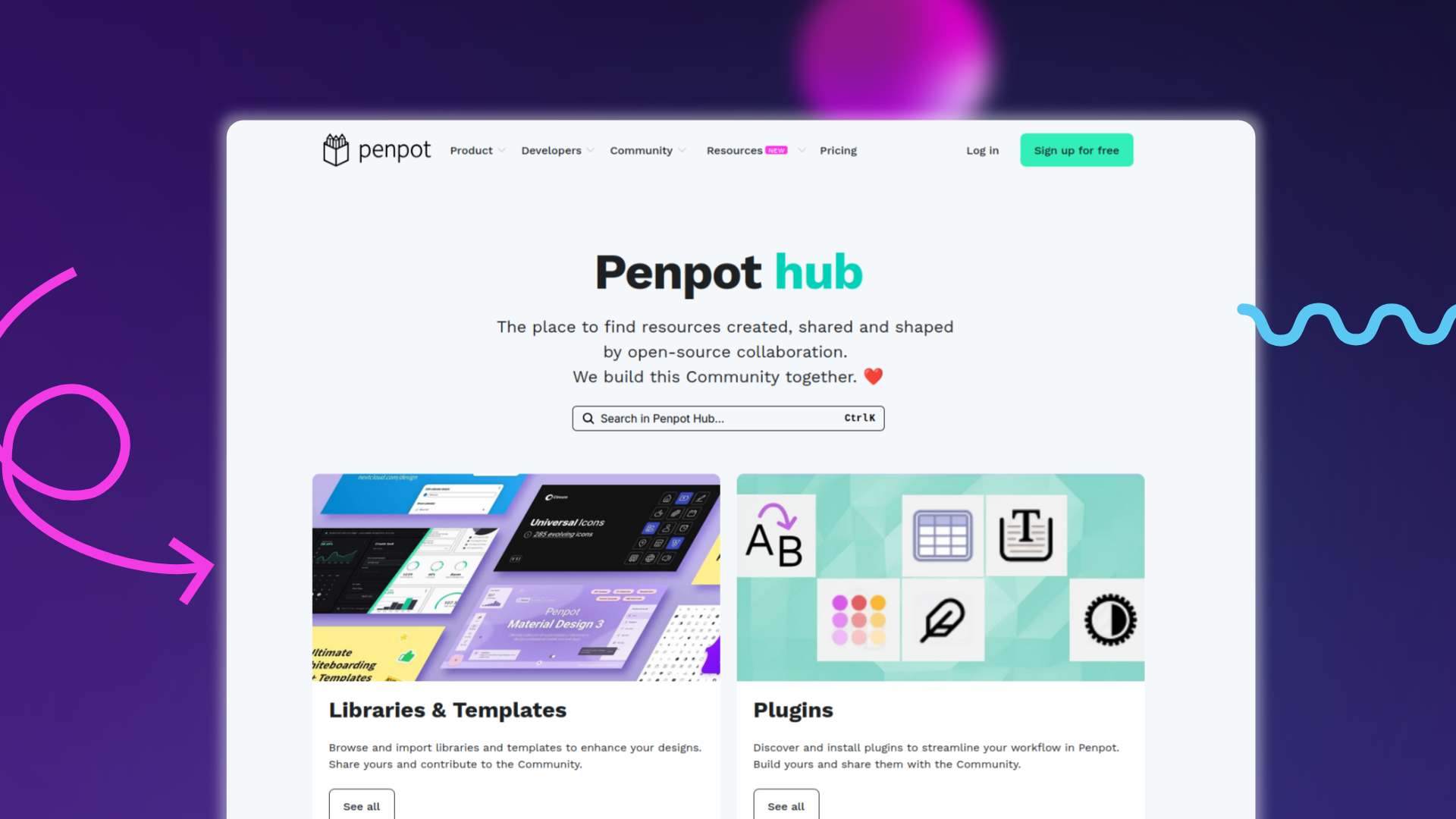
Plugin system: an official plugin hub and an open plugin interface extend the workspace, connect other tools, or support a team's own custom solutions.
API and MCP server: an open API with access tokens and webhooks, plus an MCP server for AI workflows, make the path between design and code automatable.
Deploy how you like: the hosted service is ready to use, and Docker, Kubernetes and Elestio deployments are supported for running it on your own servers at no extra cost.
Open source project: the source is hosted on GitHub under the MPL-2.0 license, so developers can review the implementation, contribute, or customize it for their own needs.
Penpot is an open-source design and prototyping platform for product teams, and it is commonly reached for as the open-source alternative to Figma. Figma charges per editor every month, while Penpot can be used on its hosted service or deployed on your own servers, where self-hosting costs nothing.
What sets it apart is that designs are expressed as code: files are built on open standards — SVG, CSS, HTML and JSON — so developers receive structure they can read rather than a picture to reproduce. It fits teams that need real design collaboration while keeping ownership of their data and meeting compliance requirements, since the design assets stay on their own infrastructure with no vendor lock-in.
Features
Real-time collaboration: several people work in the same file at once, with designs, comments and changes syncing instantly so a growing team keeps one rhythm.
Built on open standards: files rest on SVG, CSS, HTML and JSON, so exporting and further processing never depend on a proprietary format and design assets stay portable.
Inspect mode with real code: the inspect tab produces SVG, CSS and HTML directly, so developers stop measuring from annotations and implement much faster.
Design systems and tokens: native design tokens, components and variants give design and development one source of truth, keeping interfaces consistent across projects and platforms.
CSS Grid and Flex layout: responsive interfaces are built on the real layout model of the web, so a design behaves from the start the way the shipped code will.
Plugin system: an official plugin hub and an open plugin interface extend the workspace, connect other tools, or support a team's own custom solutions.
API and MCP server: an open API with access tokens and webhooks, plus an MCP server for AI workflows, make the path between design and code automatable.
Deploy how you like: the hosted service is ready to use, and Docker, Kubernetes and Elestio deployments are supported for running it on your own servers at no extra cost.
Open source project: the source is hosted on GitHub under the MPL-2.0 license, so developers can review the implementation, contribute, or customize it for their own needs.