Description
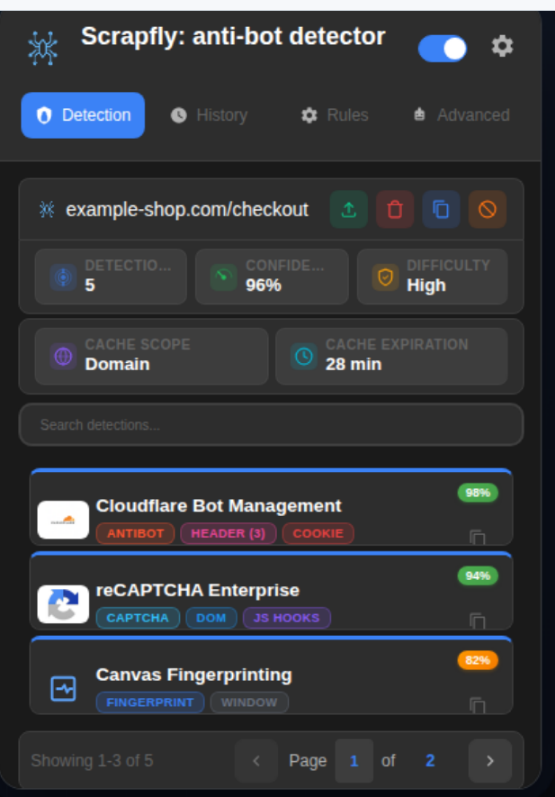
Antibot-Detector is a Chrome extension for seeing which anti-bot and risk systems sit behind a web page. Open a page, click the icon, and it lists what it recognised — Cloudflare Bot Management, DataDome, Akamai, reCAPTCHA, hCaptcha and others — each with a confidence percentage and the kind of evidence that matched.
Its conclusions do not rest on headers and cookies alone. The extension installs hooks before the page’s own scripts run and watches which browser interfaces the page reaches for: Canvas, WebGL, audio, Navigator, storage — the places commonly used for device fingerprinting — recording who touched what and how often as evidence. The result is not a vague "this site has a CAPTCHA" but which vendor’s system it is and what gave it away.
It suits front-end security assessment, checking which protections are actually live on your own site, or studying fingerprinting techniques. The licence is NPOSL-3.0, an open-source licence restricted to non-profit use, so commercial use needs separate clearance.
Identifies the protection in use: It tells the mainstream anti-bot and CAPTCHA services apart and lists them individually rather than reporting "protected" in the abstract.
Confidence scoring: Every finding carries a percentage and the evidence class behind it — headers, cookies, DOM, JS hooks — so you can judge how solid the conclusion is.
API access monitoring: Hooks installed before page scripts run record which fingerprinting-related browser interfaces the page reads, and are removed again immediately afterwards.
History: Results for visited sites are retained, so the same site can be compared across different points in time.
Rules and settings: Cache duration, history size limits and URL blacklists are configurable, and there is a debug mode.
Manifest V3: It is built to Chrome’s current extension specification, so it will not stop working because the old one was retired.
Its conclusions do not rest on headers and cookies alone. The extension installs hooks before the page’s own scripts run and watches which browser interfaces the page reaches for: Canvas, WebGL, audio, Navigator, storage — the places commonly used for device fingerprinting — recording who touched what and how often as evidence. The result is not a vague "this site has a CAPTCHA" but which vendor’s system it is and what gave it away.
It suits front-end security assessment, checking which protections are actually live on your own site, or studying fingerprinting techniques. The licence is NPOSL-3.0, an open-source licence restricted to non-profit use, so commercial use needs separate clearance.
Features
Identifies the protection in use: It tells the mainstream anti-bot and CAPTCHA services apart and lists them individually rather than reporting "protected" in the abstract.
Confidence scoring: Every finding carries a percentage and the evidence class behind it — headers, cookies, DOM, JS hooks — so you can judge how solid the conclusion is.
API access monitoring: Hooks installed before page scripts run record which fingerprinting-related browser interfaces the page reads, and are removed again immediately afterwards.
History: Results for visited sites are retained, so the same site can be compared across different points in time.
Rules and settings: Cache duration, history size limits and URL blacklists are configurable, and there is a debug mode.
Manifest V3: It is built to Chrome’s current extension specification, so it will not stop working because the old one was retired.