Description
< #AI Agents #Zero Code #LLM #Deep Research #Automated Workflows #Open Source
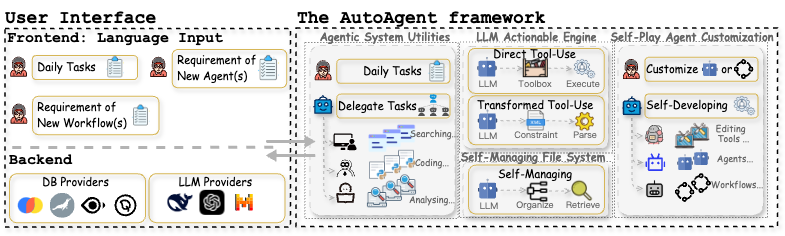
AutoAgent is a fully automated, zero-code LLM agent framework open-sourced by the Data Intelligence Lab at the University of Hong Kong. Describe the assistant you want in plain language and it handles the rest: profiling the roles, writing the tools, and orchestrating how several agents work together — no code, no framework configuration.
It suits anyone who wants a model to actually finish the job without building an agent stack from scratch. A ready-made deep research assistant ships alongside two creation modes, so the conversation is the development process and people who do not write code can still end up with their own tools and workflows.
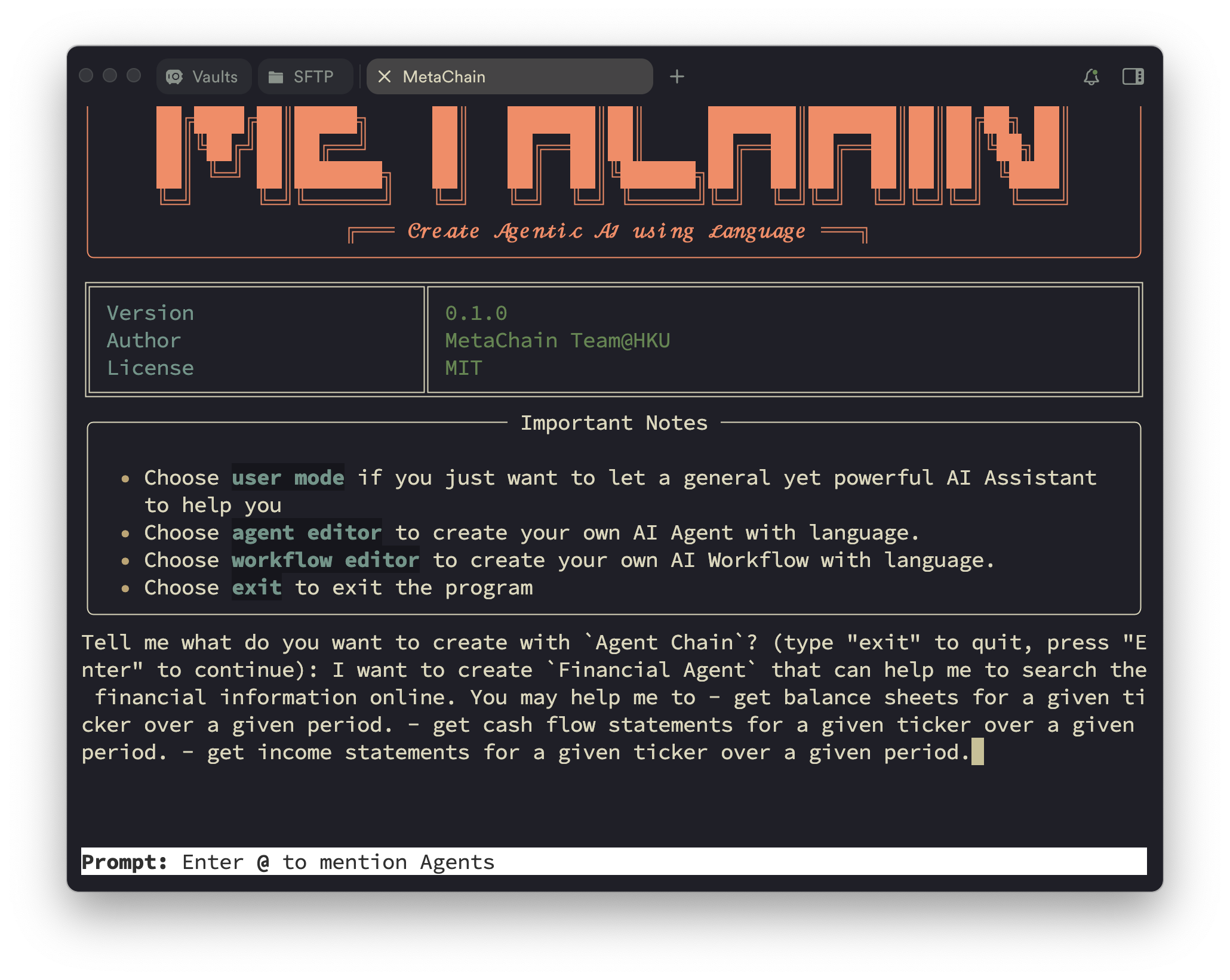
Agents from plain language: describe what you need in agent editor mode and it profiles the role, generates the agent profile, builds the required tools, and hands back one or several agents ready to run the task.
Workflow editor: the workflow editor mode takes the same conversational description of a process, breaks it into steps, and produces a runnable multi-agent workflow for tasks with fixed stages.
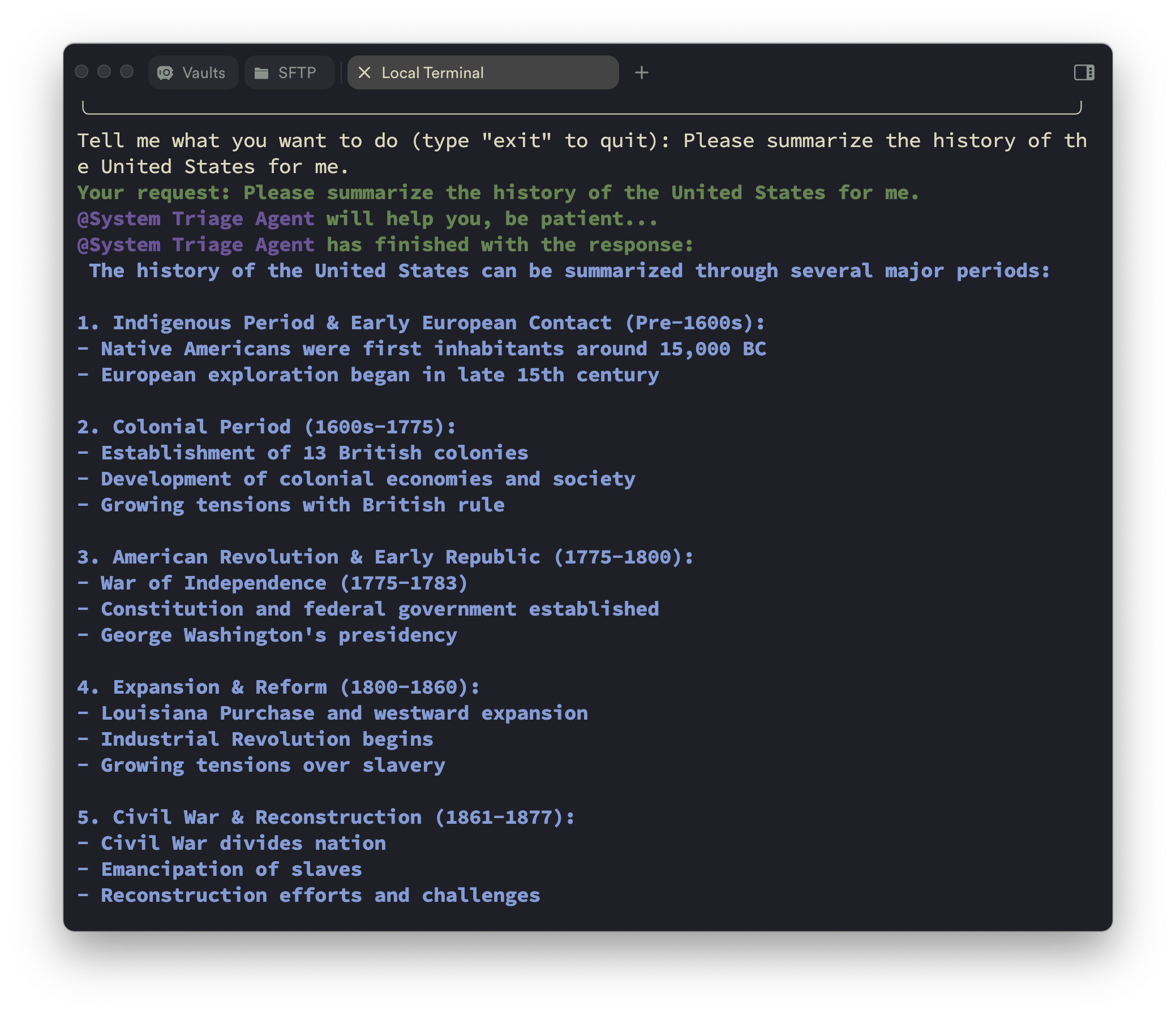
Deep research out of the box: user mode ships a multi-agent research assistant for information retrieval, complex analysis and full report writing, as an open-source alternative to subscription research services.
Bring any model: LiteLLM compatibility means OpenAI, Anthropic, DeepSeek, Gemini, Grok, Groq and HuggingFace all work — set only the API keys you actually intend to use.
Containerized execution: agents work inside a Docker container whose image is pulled automatically for your architecture, keeping generated code and file operations isolated.
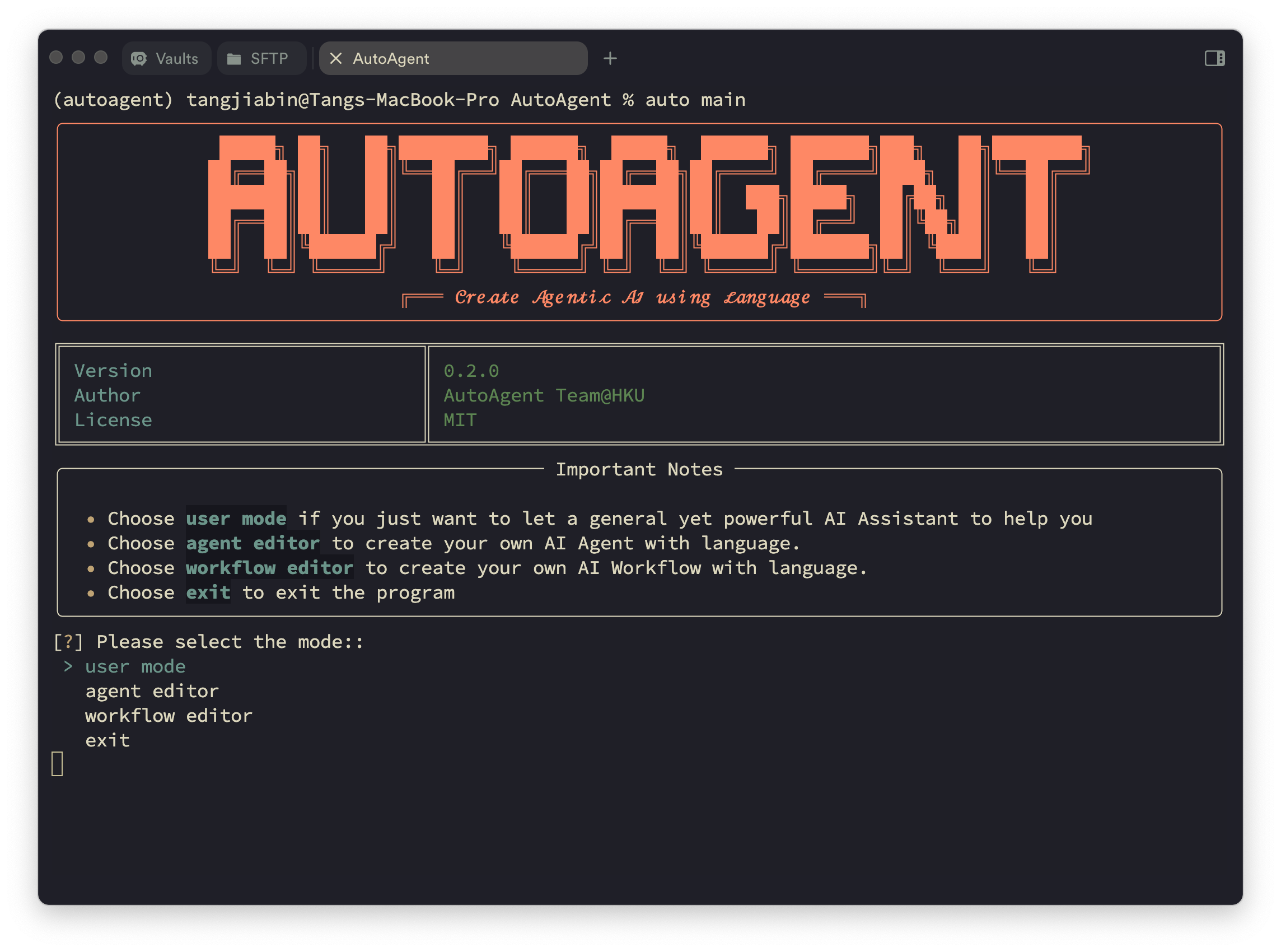
CLI first: `auto main` starts the full system and `auto deep-research` starts the lighter research mode, with container name, port, model and debug logging all adjustable by flag.
File input supported: upload your own files for the agents to work on, so analysis rests on your material rather than public pages alone.
Open source project: the source code is hosted on GitHub, so developers can review the implementation, contribute, or customize it for their own needs.
AutoAgent is a fully automated, zero-code LLM agent framework open-sourced by the Data Intelligence Lab at the University of Hong Kong. Describe the assistant you want in plain language and it handles the rest: profiling the roles, writing the tools, and orchestrating how several agents work together — no code, no framework configuration.
It suits anyone who wants a model to actually finish the job without building an agent stack from scratch. A ready-made deep research assistant ships alongside two creation modes, so the conversation is the development process and people who do not write code can still end up with their own tools and workflows.
Features
Agents from plain language: describe what you need in agent editor mode and it profiles the role, generates the agent profile, builds the required tools, and hands back one or several agents ready to run the task.
Workflow editor: the workflow editor mode takes the same conversational description of a process, breaks it into steps, and produces a runnable multi-agent workflow for tasks with fixed stages.
Deep research out of the box: user mode ships a multi-agent research assistant for information retrieval, complex analysis and full report writing, as an open-source alternative to subscription research services.
Bring any model: LiteLLM compatibility means OpenAI, Anthropic, DeepSeek, Gemini, Grok, Groq and HuggingFace all work — set only the API keys you actually intend to use.
Containerized execution: agents work inside a Docker container whose image is pulled automatically for your architecture, keeping generated code and file operations isolated.
CLI first: `auto main` starts the full system and `auto deep-research` starts the lighter research mode, with container name, port, model and debug logging all adjustable by flag.
File input supported: upload your own files for the agents to work on, so analysis rests on your material rather than public pages alone.
Open source project: the source code is hosted on GitHub, so developers can review the implementation, contribute, or customize it for their own needs.